Key Considerations for Escalations
In this section, you’ll find important aspects to keep in mind when configuring escalations in 24Cevent. These considerations will help ensure that the escalation flow behaves correctly in real-world scenarios. Understanding these details will allow you to fine-tune your configuration and avoid common mistakes in the escalation process.df
📌 Multiple Job Positions or Contacts in a Single Shift
If an entire team is responsible for handling alerts, you can create a single shift that includes multiple job positions or contacts instead of assigning individual shifts.
Recommended format:
24/7 - Area Name(Example:24/7 - TSA_Area).All assigned members will receive the initial alert before it escalates to the next level.
📌 Escalation remains within the original shift
If an alert is triggered before a shift change, it will follow the escalation logic of the original shift. 24Cevent evaluates the active shift at the start of the alert and does not re-evaluate during the escalation process.
📌 Time between escalation levels
Calls: The system attempts to call for 1.5 minutes per attempt, and escalates after three failed attempts.
Other channels (email, SMS, push notifications, etc.): Escalation occurs after 5 minutes without a response.
📌 Reusing Shifts in New Configurations and Escalations
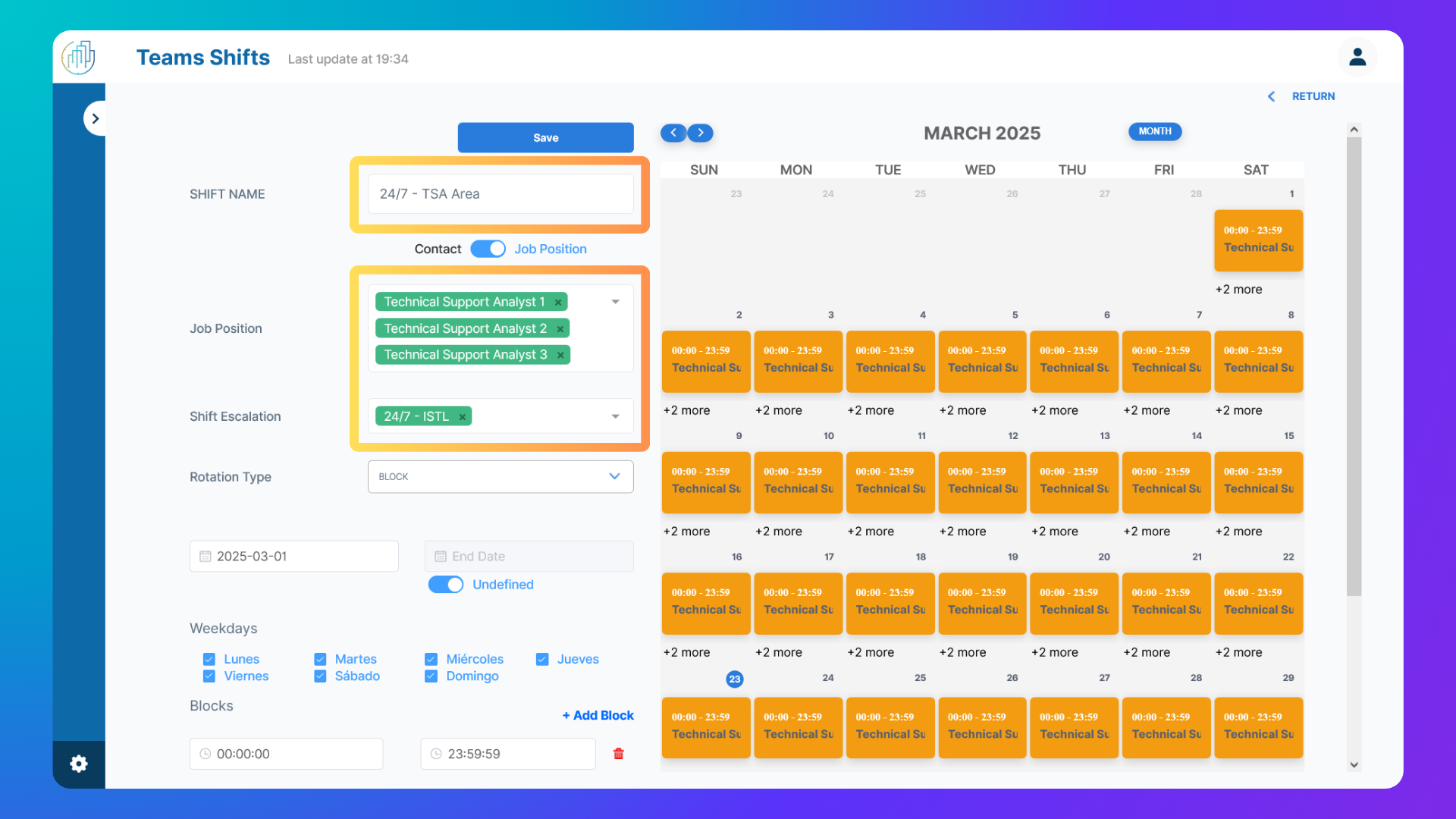
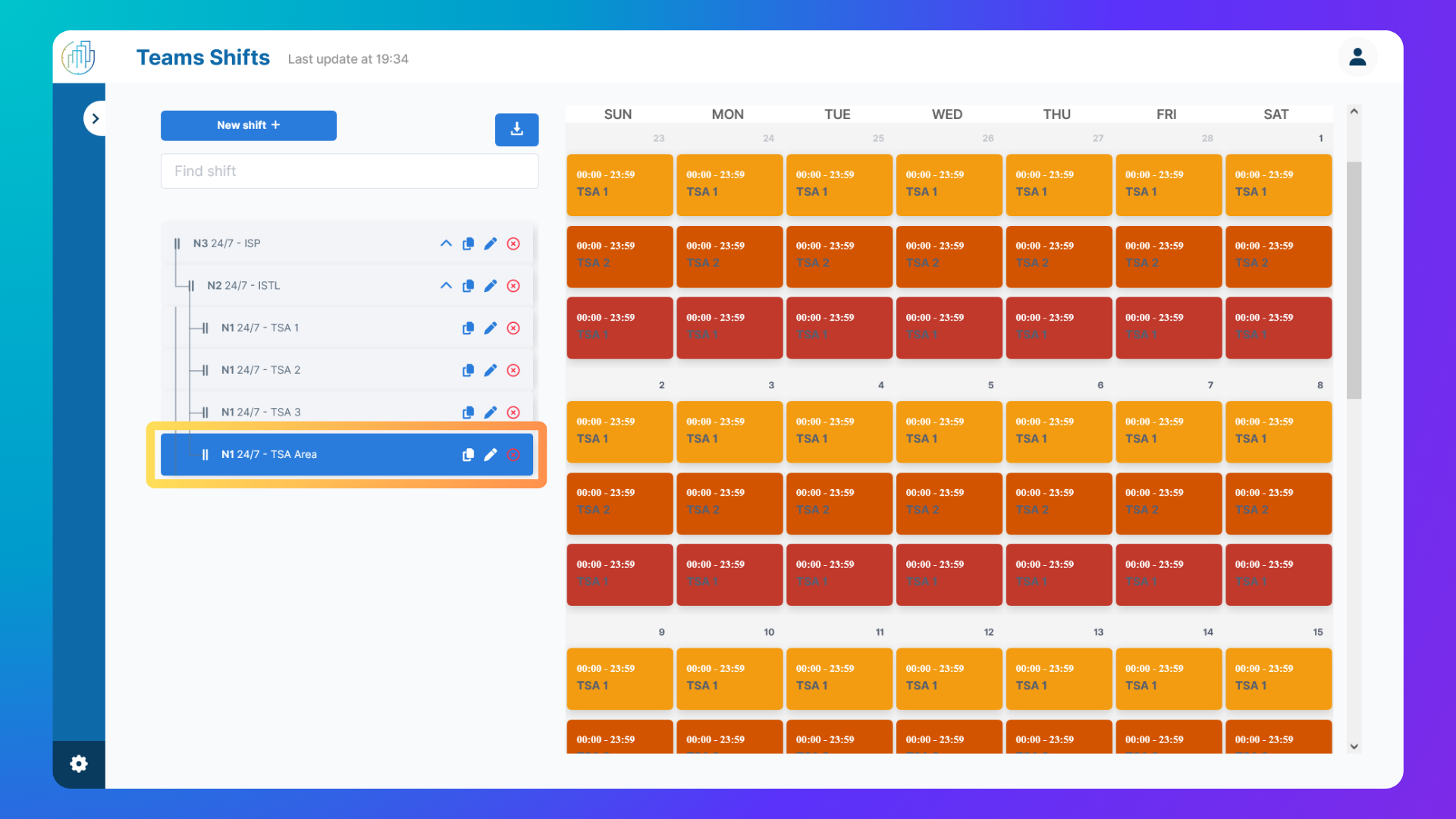
A new shift named 24/7 - TSA Area is created to group all Technical Support Analysts.
This shift is used in situations where any analyst can respond to the alert, regardless of individual expertise.
It differs from specific shifts like 24/7 - TSA 1, TSA 2, and TSA 3, which are suited for more specialized alerts.
All analysts are assigned to the new area shift.
The area shift is configured to escalate to the IT Support Technical Lead.
This reuses the lead’s shift, which was already used as an escalation target for the individual analyst shifts.
In the visual escalation diagram, you will see the new area shift linked to the lead’s shift, maintaining a clear and organized structure.