Escalation in Team Shifts
Escalations in Teams Shifts allow you to configure a notification hierarchy to ensure that if a job position or contact does not respond to an alert, it is automatically redirected to the next level of support. This functionality ensures that critical incidents are handled efficiently without relying on a single person. In this section, you will learn how to configure escalations so that each alert moves through different resolution levels, optimizing incident management within your team.
Next, we will go through a practical example with a defined escalation structure to better understand how this process is implemented.
Escalation Structure
Escalations follow a defined hierarchy, where notifications move from a lower level to a higher level if there is no response within a specific timeframe. This model ensures that incidents are addressed progressively, giving each level the opportunity to handle the issue before escalating it further.
To better understand this type of hierarchy, the following is a model we use to explain how to set up escalations.
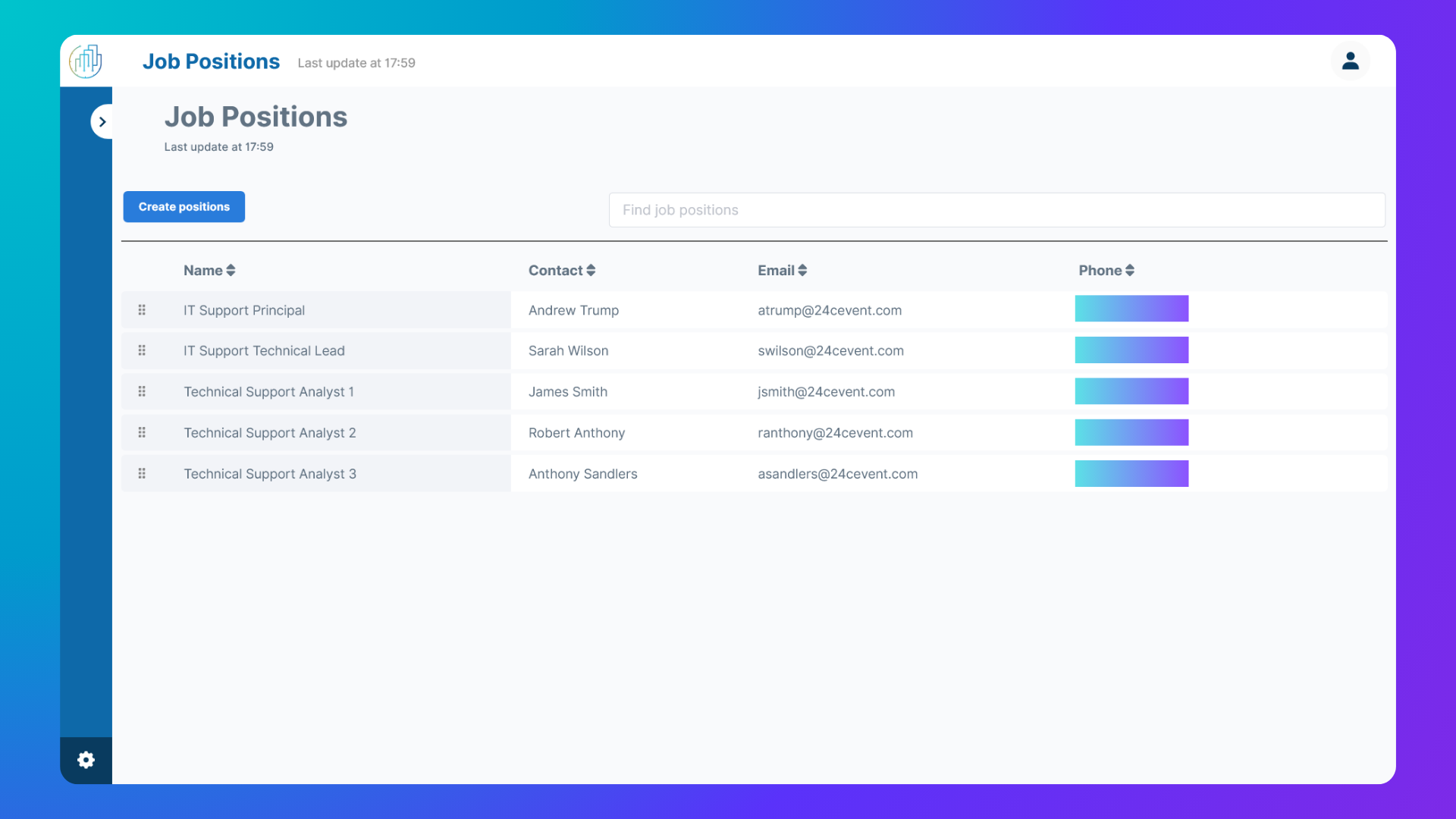
First level: Technical Support Analysts (TSA 1, TSA 2, TSA 3)
They are the first to receive notifications.
If they do not respond within the designated time (depending on the notification channel), the alert escalates to the next level.
Second level: IT Support Technical Lead (ISTL)
Receives the alert if the analysts do not respond.
If there is no response, the alert escalates to the next level.
Third level: IT Support Principal (ISP)
This is the final level of escalation.
If the alert reaches this level, it means none of the previous levels responded.
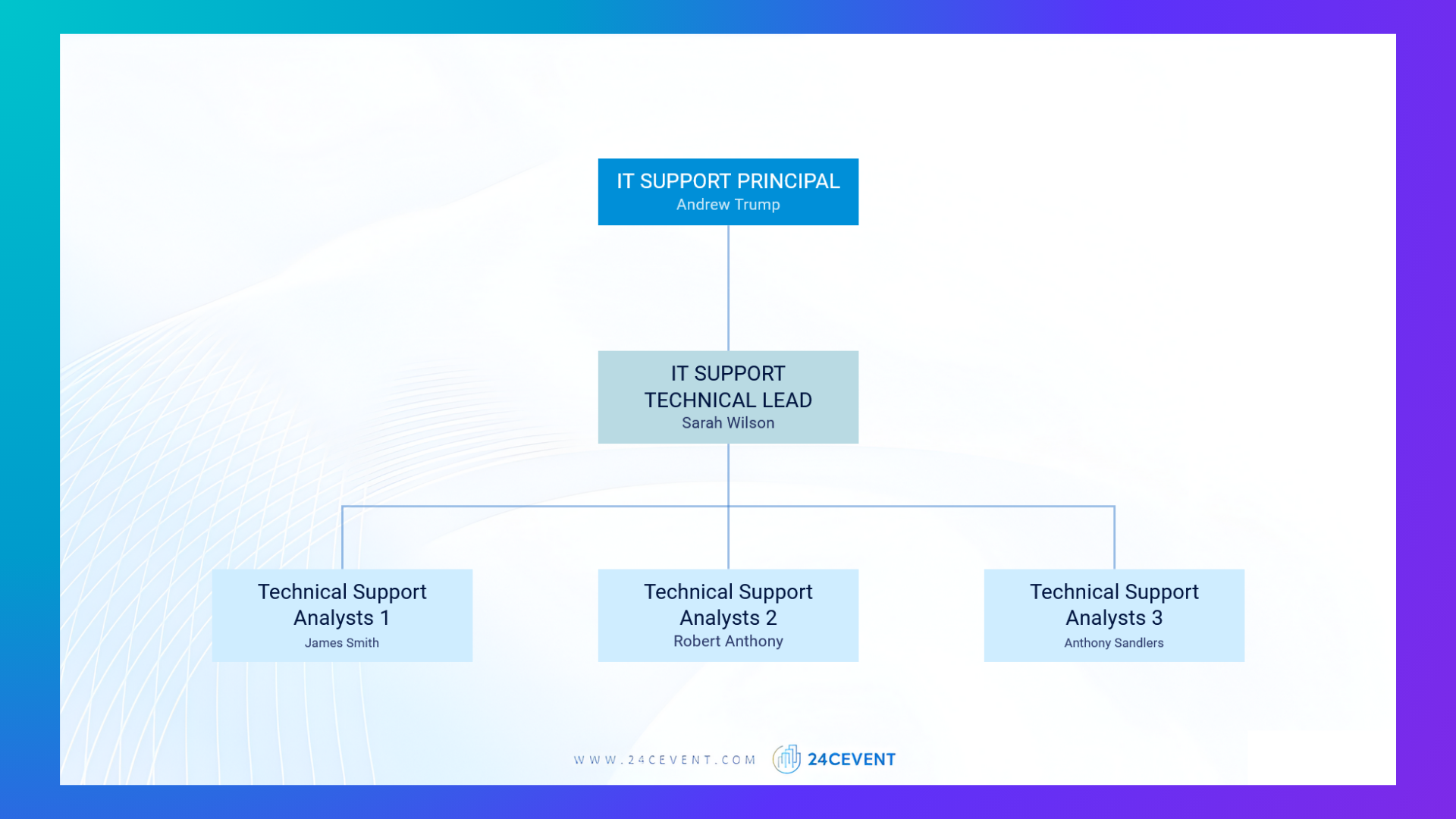
To better understand this hierarchy, refer to the organization chart image, which shows the This example serves as a guide for organizing alert handling and management through hierarchical levels. While each company can adapt the structure to its internal organization, the key is to maintain the concept of layered or level-based escalation.